
A technical guide on Plam Cem Drain Isoplam: the drainage concrete system to manage rainwater, reduce stagnation and design permeable outdoor surfaces that are permeable, resistant and consistent with environmental and landscape constraints.
Draining floors: a response to new environmental needs
Stormwater management is now a key consideration in the design of public and private outdoor spaces. Driveways, car parks, pavements, cycle paths, squares and pedestrian areas need to ensure safety, durability and continuous usability, even during frequent or heavy rainfall.
Extreme rainfall events, increasingly associated with intense downpours, require designers to assess more carefully the relationship between paved surfaces, infiltration capacity and drainage infrastructure. Impermeable surfaces can increase surface runoff, water accumulation and pressure on urban drainage systems.
Permeable concrete addresses these requirements by providing robust, water-permeable surfaces that allow rainwater to drain into the underlying layers without compromising the aesthetic quality of the space. In many areas, local regulations and landscape constraints also require technical solutions that reduce soil sealing and integrate more naturally into their surroundings.
What is draining concrete and how does Plam Cem Drain work
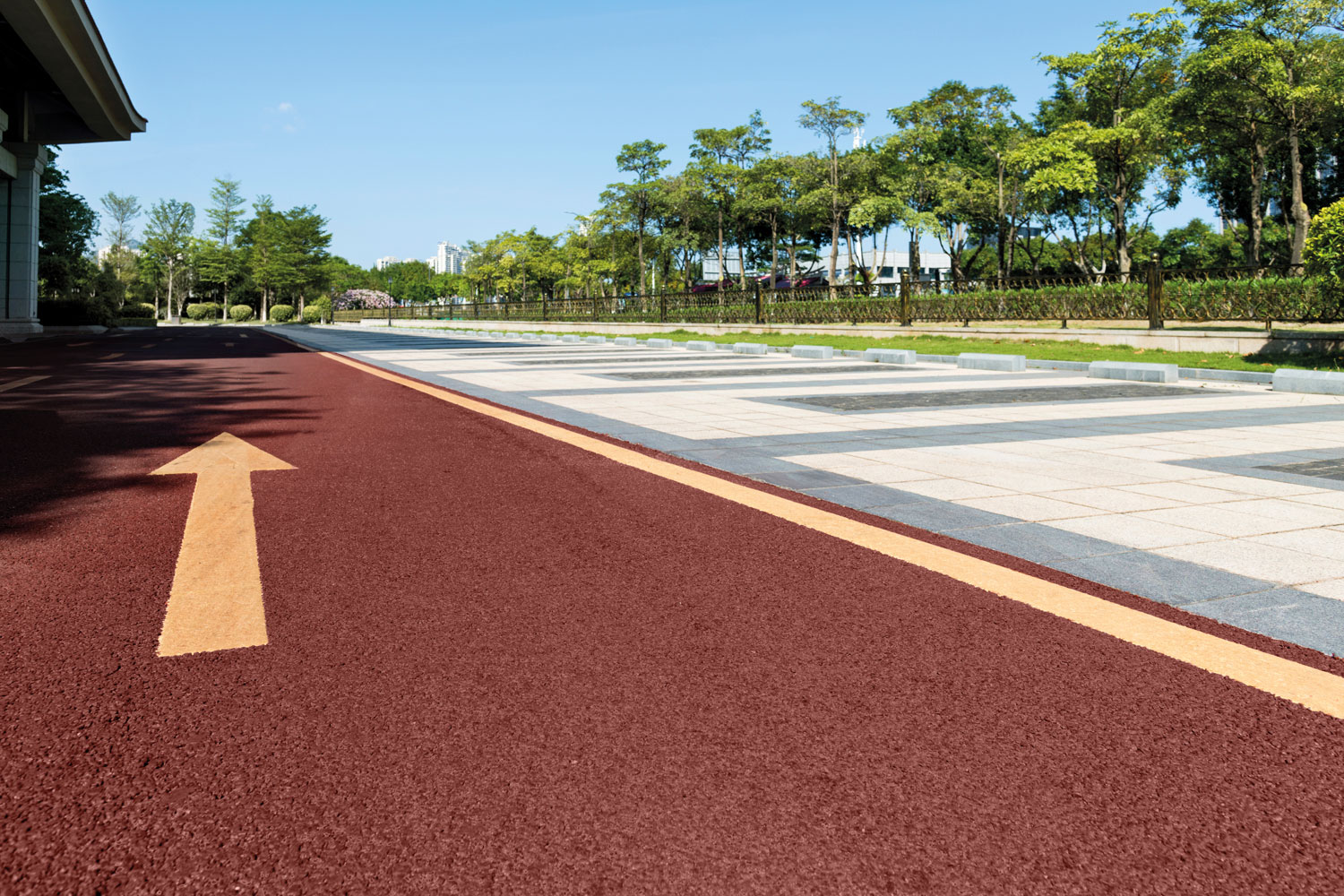
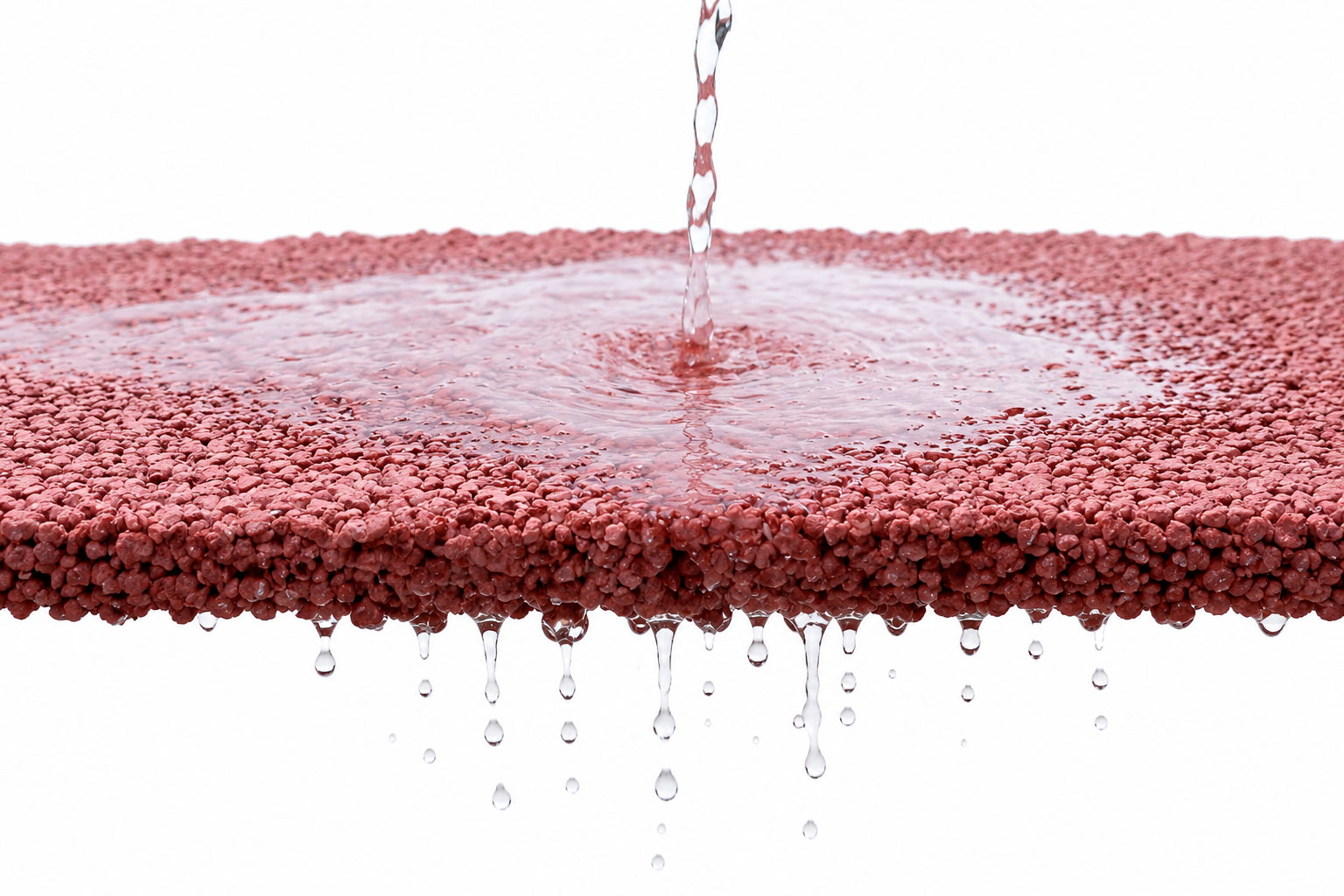
Plam Cem Drain is Isoplam’s permeable concrete system developed for permeable outdoor paving. Its porous structure, formed by interconnected voids, allows water to pass through the surface and reach the underlying layers, reducing the accumulation of rainwater on the surface.
Performance depends on the balance between aggregate grading, mix proportions, thickness, sub-base preparation and installation. For this reason, permeable paving is not simply a material but a complete technical system: the surface, permeable sub-base, gradients and drainage outlets must work together according to the intended use and the design water flow capacity.
Environmental sustainability and hydraulic risk control
From an environmental point of view, a draining concrete pavement contributes to more responsible management of rainwater. When the package is properly designed, water can infiltrate or be channelled in a controlled manner, reducing the load on the collection networks and limiting the formation of surface stagnation.
For designers and technicians this means having a concrete tool to address increasingly frequent critical issues: external surfaces subject to heavy rain, the need to maintain altitudes and slopes compatible with the existing one, the request for durable materials and, in some contexts, the obligation to respect landscape or environmental indications related to soil permeability.
Plam Cem Drain: strength, permeability and design continuity
Certified in accordance with UNI/PdR 88:2020 and compliant with CAM requirements, Plam Cem Drain permeable concrete can be installed at different thicknesses depending on the intended use and expected loads: 8 cm for pedestrian use, 12 cm for medium vehicular traffic and 20 cm for heavy vehicular traffic. This versatility allows the system to be tailored to specific design requirements while consistently delivering strength, aesthetic continuity and performance.
Plam Cem Drain permeable concrete is suitable for applications requiring drainage capacity, mechanical strength and long-term stability. The surface build-up can be designed according to the expected loads, from pedestrian pathways to vehicular areas and car parks, while maintaining a porous matrix that facilitates the passage of water.
Where to use external draining concrete
Plam Cem Drain is suitable for driveways, pavements, car parks, cycle paths, ramps, squares, public areas, pedestrian pathways and outdoor spaces exposed to rainfall or irrigation. In urban and residential settings, it helps improve stormwater management, surface usability and integration with greenery, landscape and architecture.
Plam Cem Drain can also contribute to urban comfort. When specified in light colours characterised by low thermal emissivity and a high SRI – Solar Reflectance Index (above 49), it can help mitigate the urban heat island effect, improving the liveability of outdoor spaces and cities.
When a more decorative and tactile finish is required for pedestrian areas or high-end outdoor spaces, Plam Resin Drain, Isoplam’s permeable resin-bound stone system, can also be considered.
Installation and maintenance to maintain the draining capacity
The durability of permeable concrete paving depends on the correct design of the complete system. The sub-base must be stable, suitable for the intended use and capable of receiving or conveying water, preventing accumulation beneath the surface layer.
Maintenance is also an integral part of long-term performance: periodically removing leaves, dust and debris helps keep the porous matrix clear and preserve its drainage capacity over time.
Choosing Isoplam means relying on an integrated system in which product, technical expertise and installation work together. Plam Cem Drain transforms permeable concrete into a durable, water-permeable outdoor solution designed for long-term performance, responding to evolving environmental and design requirements.