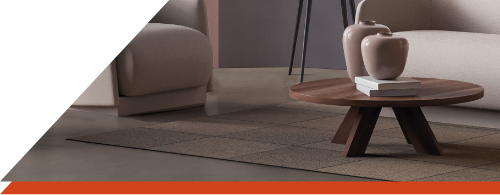
With Isoplam’s Microverlay, the aesthetic codes of the living room enter the bathroom environment: floors, walls and architectural volumes converge in a warm and enveloping cement landscape, where visual continuity, tactile quality and functionality define a new idea of well-being.
Bathroom coatings 2026: continuous and material surfaces for the contemporary project
The bathroom opens up to the rest of the home, echoing its design language, tones and materials and becoming part of a broader domestic composition in which architecture and well-being overlap without clear boundaries. What is changing most is the way surfaces are designed: the traditional succession of different finishes, joints and textures is giving way to continuous materials that guide the eye and create a visual connection between different elements.
The bathroom thus becomes part of the home’s interior landscape: no longer simply a collection of technical components, but a cohesive space designed with the same attention devoted to the other areas of the home. Isoplam Microverlay microcement interprets this evolution in design through a versatile material that can be applied to a wide range of architectural elements, including floors, walls, steps, furniture and niches. Its technical and aesthetic properties make it possible not only to create continuity within the bathroom, but also to extend the same surface into adjacent spaces, establishing visual and perceptual connections between different areas of the home.
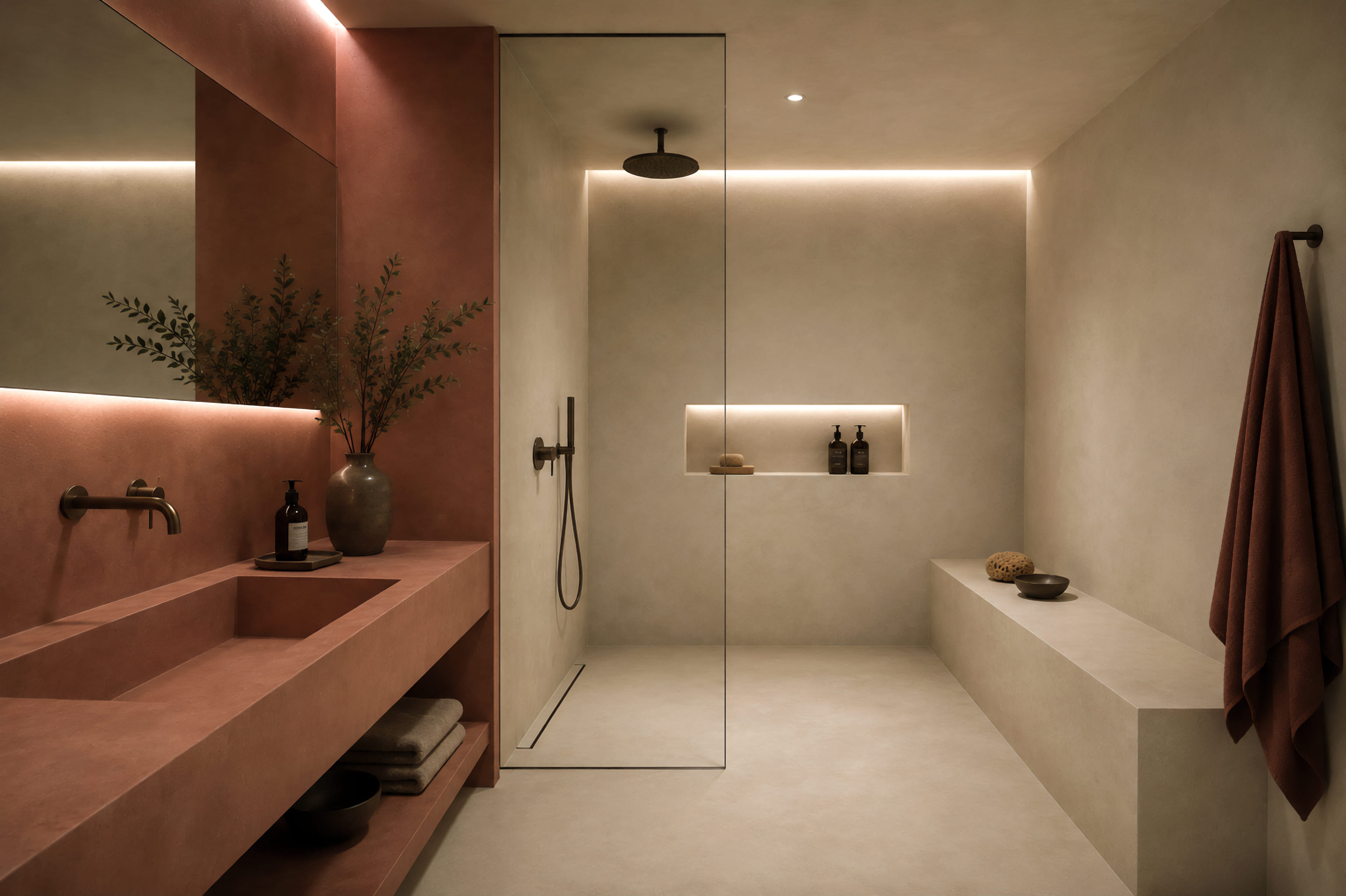
A continuity that does not, however, translate into aseptic minimalism: the cement material in fact abandons the strictly neutral atmospheres to open up to a controlled personality, made of earthy colours, opaque finishes, tactile textures. The slight variations that characterise the surface introduce depth and movement, maintaining a measured balance in which matter does not dominate the architecture.
How Microverlay microcement works
Developed by Isoplam for both horizontal and vertical surfaces, Microverlay microcement makes it possible to use the same finish on floors, walls, steps, niches, washbasin countertops and furniture, preserving the visual lightness and overall coherence of the design. With a thickness of just 3 millimetres and excellent adhesion, it can also be applied over a wide range of existing substrates, including ceramic, marble, wood and tiles, reducing the need for demolition and making it a particularly effective solution for renovation projects.
The choice of different grain sizes, textures and over 50 colours makes it possible to tailor the character of the surface to the specific design: from smoother, more uniform finishes with subtle tonal variations to more tactile and textured interpretations, offering greater visual depth and enhanced grip. Finally, the seamless surface makes cleaning easier, an especially valuable feature in bathrooms, where durability, moisture resistance, hygiene and aesthetic quality need to coexist.